








APAC CIOOutlook
About UsConferencePartner With Us
  • Technologies
    • Blockchain
      Data Intelligence and Management
      Digital Transformation
      FinTech
      Generative and Agentic AI
      Low Code No Code
      Mobile Application
      Networking
      Robotics
      Storage
      Wireless
  • Industries
    • Automotive
      Aviation
      Banking
      Construction
      E-Commerce
      Food and Beverages
      Healthcare
      Insurance
      Logistics
      Manufacturing
      Retail
      Supply Chain
      Travel and Hospitality
  • Platforms
    • Microsoft
      Salesforce
      SAP
  • Strategic Solutions
    • Business Intelligence
      Contact Center
      Corporate Finance
      CRM
      Cyber Security
      Data Center
      Enterprise Asset Management
      Enterprise Performance Management
      IT Infrastructure and Services
      Managed Services
      Procurement
      Unified Communication
      Workflow
  • Home
  • CXO Insights
  • Leadership Perspectives
  • Innovation Insights
  • Research
  • News
  • Whitepapers
  • CXO Awards
#

Apac CIOOutlook Weekly Brief

×

Be first to read the latest tech news, Industry Leader's Insights, and CIO interviews of medium and large enterprises exclusively from Apac CIOOutlook

Subscribe

loading

THANK YOU FOR SUBSCRIBING

  • Home
Editor's Pick (1 - 4 of 8)
left
ICE: The New Future

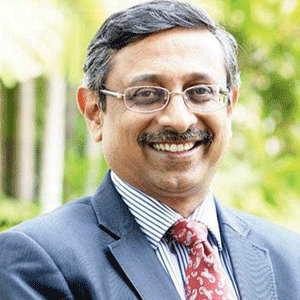
V S Parthasarathy, Group CFO, Group CIO, President (Group Finance & M&A), Mahindra

Leveraging Technology to Create Better Spaces

Terry Lenhardt, VP & CIO, Steelcase

Sustained Communication in the Face of Consistent Change

Rod Sagarsee, CIO, Brinks Gilson & Lione

Doing Things in a Whole New Way

Shane Miller, CIO, HSHS Division-Eastern Wisconsin

Navigating the AI Landscape

Kreecha Puphaiboon, Head of AI/ML Banpu Public Company Limited

Driven by People and Data, Building HR Digital & Analytics Capability to Enhance Employee Experience

Daniel Kusmanto, Global People Services at ASM

The Red or the Blue Pill...Digital Disruption in HR

Bernadine Symonds, Group Head of People, Meridian Group

Technology Modernization for Talent Acquisition and Engagement

Alok Mehta, SVP, CIO Business Systems at Kemper and Emily Smyers, Director, Talent Acquisition at Kemper

right

Keeping the 'Human' in Human Resources

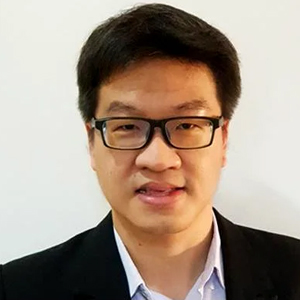
Ernest Phang, Head of Corporate Services, Group Human Resources, OCBC Bank

Tweet
content-image

Ernest Phang, Head of Corporate Services, Group Human Resources, OCBC Bank

Whichever area or industry you’re in, no one can avoid technology in this day and age. Terms such as data analytics, Artificial Intelligence (AI), digitalisation and Robotic Process Automation (RPA) are fast becoming the language used not just at work, but even in our daily lives.As a Human Resource practitioner for more than 20 years, I have seen first-hand how technology is changing the way HR department operates.

The role of HR has evolved and expanded with the emergence of technology. Traditionally,a significant share of time was spent carrying out transactional work such as hiring people, and managing payroll and benefits administrations, which were time consuming and mostly paper heavy. Asdata was in siloesand costly to collect, HR had to rely more on intuition and experience in decision making, rather than basing decisions on data. Some may think that technology and robots would take the ‘human’ touch out of Human Resources, but the reality is that we are actually becoming more ‘human’, especially in these three key areas.

We Understand Our People More

The role of HR in any organisation is multidimensional. Beyond just hiring people, it is our responsibility to engage, nurturetalents, and retain them.Organisations need to leverage on human capital to address business challenges and achieve business objectives. To do so, we need tocomprehendour employees better, and a good way to do this is through the applicationof data analytics.

At OCBC, we have a flexible benefits programme where employees get an‘x’sum of money every year which they can use to claim from a whole range of expenses such as medical bills, plane tickets and gym memberships.When we looked at what and how much all our employees spend on medical expenses, we unearthed some interesting insights.We found that there were segments of our employees displaying distinctive patterns of ‘spending’ behaviours.For example, our older employees were putting in more claims for their parents’ medical expenses. So, what we did was to extend the medical coverage for parents of our employees.

With the younger employees, data showed that they were not utilising their medical outpatient benefits, so we allowed all employees to convert up to half of their medical outpatient benefits to flex dollars instead.The enhancementswere well-received.

More than 40 percent of our staff chose to convert their medical benefits to flex dollar and over half of them were under 35 years old. A third of our staff have also enrolled their parents to the medical benefits plan. Without data, we would not have been able to uncover our employees’ preferences and enhance the existing scheme.

Employees Must Be Prepared Not Just In Terms Of Skillsets, But Mindsets As Well in This Era of Technology Advancement

We Train Our People More

Because the chiefrole of HR is to create an ecosystem where workforce is ready, competent and performing at its optimum potential, we strive to ensure that we are well-informed in the development in technology so that we can make the right decisions. We invest and use technology in a manner that enables us to be more efficient, productive and effective so that we can maintain, or even strengthen our relationship with our employees in terms of engagement. It is crucial to identify the skillsets and tools that are required by our employees to thrive in any given situation, especially in this competitive environment where technology is constantly changing the landscape of the area we are operating in and as a result, jobs are being redesigned.

With new jobs of the future, we need to have learning platforms that enable us to scale up our training capacity. For example, we invest in a cloud learning management system and launched Campus On Cloud (COC).Through COC, 6,700 e-learning courses were made available to our colleagues not just in Singapore but China as well. This is on top of the 170 courses we conduct in classroom settings. COC enables us to extend learning beyond classroom and, as a result, change the way people learn.Our employees can now access courses anytime, anywhere. They can replay, repeat and even set up learning communities to help them communicate with their trainers or other colleagues on the subject matter. Overall, COC improved the learning experience of our employees and we have seen an increase of 41 percenton time spent learning online since its launch in early 2018.

Digitalisation and RPA have definitely enabled HR to be more productive. By deploying RPA in payslip extraction for instance, we managed to save 24 man-days per year. This enables our HR colleagues to be more efficient because theynow have more time for value-added tasks such as spending more quality time to strengthen their relationships with our staff.

We Look Out for Our People, Even into theFuture

Technology is changing jobs and our responsibility as HR is to prepare our people for jobs of the future. Employees must be prepared not just in terms of skillsets, but mindsets as well in this era of technology advancement.

In a recent study done by technology company, Cisco, andglobal forecasting firm, Oxford Economics, one-fifthof Singapore's workforce will have their jobs displaced by 2028, due to technological disruptions. Recognising the magnitude and impact of this, we took the initiative to develop and implement the Workforce Transformation Initiative (WTI) across the Bank. We identified the critical roles that will be impacted, and the competencies needed for our people to take on these future transformed roles. A framework was developed to ensure our people acquire such competencies as having a digital mindset, being agile to changes and possessing the ability to bring about innovation and continuous improvement, amongst others.

In May 2018, we launched a three-year $20million programme called the OCBC FutureSmartProgramme to equip our employees with digital competencies. The activities and contents for this programme are made available to our staff via Campus on Cloud. On top of that, we launchedseven learning communities to provide more support to our employees for them to adapt to the changing landscape at work.We do this because we feel that it is our responsibility to continuously reskill and upskill our employees so that they continue to be relevant through the disruption brought by technology.

The advancement in technology is not slowing down in the foreseeable future and it is very important for everyone in the organisation, especially HR because of the role it plays in the organisation, to continue to adapt, evolve and strategically leverage on technology so that we can thrive in the ever-changing job landscape.
tag

HR

Human Resource

Learning Management

Weekly Brief

loading
Top 10 HR Technology Solutions Companies - 2022
Featured Issue

I agree We use cookies on this website to enhance your user experience. By clicking any link on this page you are giving your consent for us to set cookies. More info

APAC CIOOutlook
Follow on LinkedIn

About

  • Home
  • About Us
  • Partner With Us

Stay Connected

  • Subscribe
  • Newsletter
  • Sitemap

Contact Us

  • editor@apacciooutlook.com
  • sales@apacciooutlook.com
  • marketing@apacciooutlook.com

Legal

  • Editorial Policy
  • Privacy Policy
  • Terms of Use

© 2026 APAC CIOOutlook. All rights reserved. Headquarteblue in Fort Lauderdale, FL, USA.

This content is copyright protected

However, if you would like to share the information in this article, you may use the link below:

https://hr-technology.apacciooutlook.com/cxoinsights/keeping-the--human--in-human-resources-nwid-6323.html